Zeaxanthin: Benefits, Research & Safety
Zeaxanthin is a yellow-orange carotenoid found in leafy greens, corn, eggs and orange peppers. It builds up in the macula, the central part of the retina, so people take it mainly for eye health. Most research tests it together with lutein.
Zeaxanthin Ingredient Guide
Also known as: zeaxanthin, RR-zeaxanthin, meso-zeaxanthin (related form), carotenoid xanthophyll
- What it is
- Zeaxanthin is a xanthophyll carotenoid, a plant pigment. Humans get it from food and cannot make it.
- What it does
- Zeaxanthin and lutein make up the macular pigment in the retina. This pigment is thought to filter blue light and act as an antioxidant in eye tissue.
- How it is used
- People take it as a capsule or softgel, usually combined with lutein, and often in eye-health formulas. It is usually taken with a meal that contains fat.
- Natural sources and forms
- Food sources include kale, spinach, corn, egg yolk, orange peppers and goji berries. Supplements use marigold-flower extracts or goji-derived forms, and some include meso-zeaxanthin, a related compound.
- Why it appears in formulas
- Makers add it to eye and vision formulas because it is a natural part of the macula. It often appears next to lutein, in a ratio such as 5:1 or 10:1 lutein to zeaxanthin.
- What to know before use
- Check with an eye doctor or pharmacist first if you have an eye condition or take other supplements. A supplement is not a substitute for eye exams or medical care.
What the Research Says
Overall: Moderate evidence
Most human research tests zeaxanthin together with lutein, so the effects of zeaxanthin alone are hard to separate out. Trials and meta-analyses consistently show that these supplements raise macular pigment optical density (MPOD), which is a measurable marker in the retina.
The larger question is whether this translates into better eye outcomes. In the AREDS2 trial, which was sponsored by the National Institutes of Health, adding lutein and zeaxanthin to the standard AREDS formula did not significantly reduce progression to advanced age-related macular degeneration (AMD) in the whole group. When they replaced beta-carotene, however, the 10-year follow-up reported a lower risk of progression to late AMD, and no extra lung cancer risk in smokers. That finding applies to people who already have intermediate AMD, not to the general public.
Evidence for other outcomes, such as visual performance, glare, contrast sensitivity or cognition, is smaller and more mixed. Many studies are short, small and use different doses and combinations. The research is therefore moderate for macular pigment and for AMD formulas in at-risk people, and limited elsewhere.
| Studied for | What the research says | Evidence |
|---|---|---|
| Macular pigment density | Trials and meta-analyses report that lutein, zeaxanthin or meso-zeaxanthin supplements raise MPOD compared with placebo. | Strong evidence |
| Age-related macular degeneration | In AREDS2, lutein and zeaxanthin added to the standard formula had no significant overall effect on progression. As a replacement for beta-carotene, they were linked to a lower risk of late AMD in the 10-year follow-up. | Moderate evidence |
| Visual performance (glare, contrast) | Some small trials in healthy adults suggest possible gains in contrast sensitivity or glare recovery. Results vary between studies. | Limited evidence |
| Cognition | Early studies link higher macular pigment to better cognitive scores in some groups. Evidence that supplements change cognition is preliminary. | Early evidence |
Did you know? A natural internal filter
Zeaxanthin is concentrated at the center of the macula, while lutein is found more in the surrounding area. Meso-zeaxanthin, a third pigment in the macula, is formed in the retina from lutein and is uncommon in food.
Amounts Used in Studies
These are amounts researchers used, not dosing advice. Ask your doctor or pharmacist what is right for you.
| Form | Amount | Study context |
|---|---|---|
| Zeaxanthin with lutein (AREDS2 formula) | 2 mg zeaxanthin plus 10 mg lutein per day | Used in the large AREDS2 trial in people with AMD |
| Zeaxanthin in eye-health trials | Up to about 10 mg/day, with some studies up to 20 mg/day | Shorter trials measuring macular pigment and visual function |
Safety, Side Effects and Interactions
At typical supplement amounts, lutein and zeaxanthin are generally well tolerated. Evidence summaries report no known safety signals in the usual range, and studies with 5 to 10 years of follow-up have not found long-term safety concerns. Zeaxanthin is also a food additive.
The most notable harmless effect is carotenodermia, a yellowish skin tint that can occur with very high carotenoid intake. It fades after stopping. Some people report mild stomach upset.
High-dose, long-term data are limited, and amounts above ordinary food intake have not been well studied in pregnancy or breastfeeding. Supplement quality varies, and some products combine zeaxanthin with other ingredients such as vitamins, zinc or fish oil, which carry their own cautions. Beta-carotene, which was removed from the updated AREDS formula, raised lung cancer risk in smokers in earlier research, so check the full label of any eye formula.
Possible interactions
- No well-established drug interactions have been documented at usual amounts, but check with a pharmacist if you take regular medicines.
- Dietary fat helps carotenoid absorption, and taking it with a meal containing fat may raise blood levels.
- Fat-blocking drugs or cholesterol-lowering bile acid binders may reduce carotenoid absorption.
- High doses of other carotenoids, such as beta-carotene, may compete with lutein and zeaxanthin for absorption.
- Combination eye products may contain zinc, vitamin C or vitamin E, which can interact with some medicines.
Avoid it or ask a doctor first if
- Pregnant or breastfeeding without medical advice
- Have been diagnosed with an eye disease, unless your eye doctor approves
- Smokers considering products that also contain beta-carotene
- Allergic to marigold or other plants in the extract
- Taking multiple supplements or medicines without pharmacist review
Supplements We've Reviewed That Contain Zeaxanthin
Each review checks the full formula, price, refund policy and side effects.

TheyaVue Review: Does This Eye Supplement Really Work?
Vegetarian capsule supplement marketed for eye and vision health, sold only through the official website.
Read the review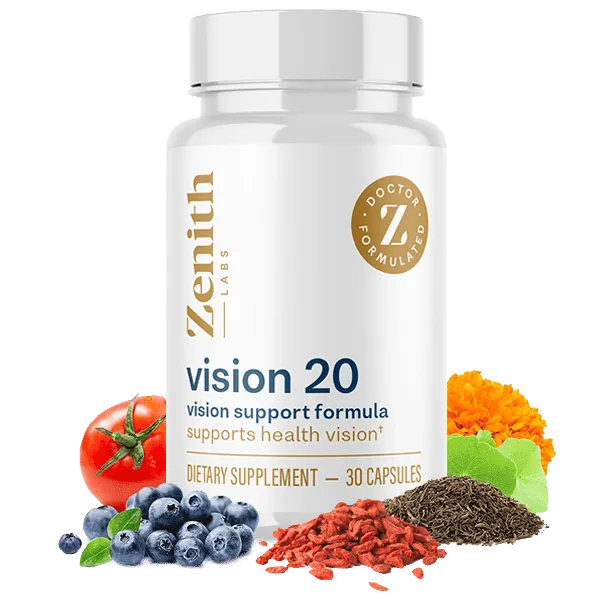
Vision 20 Review: Does This Eye Health Supplement Really Work?
A 10-ingredient carotenoid and zinc capsule sold through the official website, marketed for near- and far-distance vision, low-light vision and age-related vision decline.
Read the reviewFrequently Asked Questions About Zeaxanthin
Does zeaxanthin really work?
Research shows zeaxanthin, taken with lutein, raises macular pigment. Whether this improves eye health depends on the person. In AREDS2, benefits for AMD progression were seen when they replaced beta-carotene, not as an overall add-on. Evidence for other uses is limited.
Is zeaxanthin safe?
At usual amounts it is generally well tolerated, with no known long-term safety signals in studies up to 10 years. Very high intake may tint the skin yellow. People who are pregnant, nursing or have an eye condition should speak with a clinician first.
Should I take zeaxanthin or just eat more greens?
Foods such as spinach, kale, corn, eggs and orange peppers supply zeaxanthin along with other nutrients. Supplements provide a set amount, which may suit people who eat few of these foods. A varied diet is a sensible starting point.
Is zeaxanthin the same as lutein?
They are related carotenoids with a very similar structure, and they are often sold together. Both accumulate in the macula, but zeaxanthin is concentrated in the center while lutein is more abundant around it.
Can zeaxanthin prevent macular degeneration?
No supplement has been proven to prevent AMD. Studies looked at slowing progression in people who already have intermediate disease, using a specific formula. Regular eye exams remain important.
Sources
- NIH study confirms benefit of supplements for slowing age-related macular degeneration — National Eye Institute
- Lutein and zeaxanthin (supplement) — Alzheimer's Drug Discovery Foundation Cognitive Vitality
- AREDS2 — WikiJournalClub
Last reviewed: