Lactobacillus Salivarius: Benefits, Research & Safety
Lactobacillus salivarius, now often called Ligilactobacillus salivarius, is a probiotic bacterium that naturally lives in the human mouth and gut. People take it mainly for oral health, such as plaque, gum health and breath, and sometimes for general digestive or immune support. Human research exists but is still small and strain-specific.
Lactobacillus Salivarius Ingredient Guide
Also known as: Ligilactobacillus salivarius, L. salivarius, Lactobacillus salivarius, Lacticaseibacillus-era relabeled genus: Ligilactobacillus
- What it is
- A lactic acid-producing bacterium found naturally in the human mouth, intestine and elsewhere. It was reclassified from the genus Lactobacillus into Ligilactobacillus, so labels may show either name.
- What it does
- It is thought to compete with less desirable microbes for space and nutrients, and some strains make bacteriocins (natural antimicrobial proteins) and acids. These effects are mostly shown in lab and animal studies, and results depend on the specific strain.
- How it is used
- It is taken as capsules, lozenges, chewable tablets or powders, often in oral-care probiotic products. Some studies used heat-killed cells rather than live ones.
- Natural sources and forms
- It is made by fermentation and sold as live or heat-killed cells, measured in colony-forming units (CFU). Particular strains (for example, those with codes such as CP3365 or WB21) were the ones tested, so a result for one strain does not apply automatically to another.
- Why it appears in formulas
- Makers add it to oral-health blends because it is a natural resident of the mouth and some strains were tested for plaque, gum and breath outcomes. It is often paired with other oral probiotics.
- What to know before use
- People who are seriously ill, immunocompromised, or have central venous catheters or other implanted devices should talk to a doctor first, because rare probiotic-related infections have been reported with Lactobacillus species.
What the Research Says
Overall: Early evidence
The human research on L. salivarius is small and mostly strain-specific. The best-known trials come from a few research groups, particularly in Japan, and test strains such as CP3365 (heat-killed) and WB21. A randomized, placebo-controlled trial of heat-killed CP3365 in healthy adults reported that it helped maintain gum measures such as plaque control, bleeding on probing and pocket depth. Other trials looked at peri-implant tissue health, older adults and a crossover study of a probiotic floss, mostly in small groups.
Most studies measured surrogate markers, such as plaque scores, bleeding or bacterial counts, instead of long-term outcomes like tooth loss or diagnosed periodontitis. Some animal work, such as in rats, was promising but cannot be assumed to apply to people. Outside the mouth, reviews note the species has been studied for asthma, atopic dermatitis, halitosis and infection prevention, but to a limited degree.
Because results depend on strain, dose and product form, and independent replication is limited, the evidence is best described as early. It does not show that L. salivarius treats or prevents gum disease or cavities.
| Studied for | What the research says | Evidence |
|---|---|---|
| Gum and plaque measures | A placebo-controlled trial in healthy adults using a heat-killed strain reported better maintenance of plaque, bleeding and pocket depth measures. Trials are small and strain-specific. | Early evidence |
| Peri-implant tissue health | A small double-blind trial (23 maintenance patients) tested a specific strain for tissue health around dental implants. It was limited in size and scope. | Early evidence |
| Oral bacteria balance | A small crossover trial of a probiotic floss reported lower levels of some gum-associated bacteria. Changes in bacterial counts do not prove better clinical outcomes. | Early evidence |
| Bad breath, allergy and other uses | Reviews note the species was studied for halitosis, asthma, atopic dermatitis and infections, but evidence is limited and varies by strain. | Limited evidence |
Did you know? A name change you may notice on labels
In 2020, scientists reorganized the large Lactobacillus genus into many new genera, and L. salivarius became Ligilactobacillus salivarius. The 'salivarius' part of the name points to its origin in human saliva.
Amounts Used in Studies
These are amounts researchers used, not dosing advice. Ask your doctor or pharmacist what is right for you.
| Form | Amount | Study context |
|---|---|---|
| Heat-killed L. salivarius cells (specific strain) or live probiotic capsules/lozenges | Varies widely by strain and product; often reported in CFU or mg of cells | Short trials of several weeks to six months in healthy adults, older adults or dental patients; no single standard amount exists |
Safety, Side Effects and Interactions
A 2017 review in the Journal of Applied Microbiology concluded that L. salivarius does not appear to pose a health risk at the amounts currently used, but noted that many strains intended for clinical use have not had dedicated safety studies. In healthy people, probiotics in general most often cause mild effects such as gas or bloating.
The main concern is rare infection. A 2023 review found that Lactobacillus bacteremia (bacteria in the bloodstream) is uncommon but can be serious, with risk factors including severe underlying disease, suppressed immunity, intensive care stays and central venous catheters. The review covered Lactobacillus broadly rather than L. salivarius alone. The NIH Office of Dietary Supplements likewise notes probiotics might cause infections in people who are seriously ill or have weak immune systems, and that the FDA has warned about risks in preterm infants.
Supplement quality can vary, and labeled strains and counts are not always verified. Stop use and contact a healthcare provider if you develop fever, severe abdominal pain or other worrying symptoms.
Possible interactions
- Antibiotics and antifungals may reduce the number of live probiotic bacteria; a clinician or pharmacist can advise on timing.
- Immunosuppressant drugs, chemotherapy or corticosteroids raise the concern about probiotic-related infection, so ask a doctor first.
- Antiseptic mouthwashes (such as chlorhexidine) may reduce oral probiotic bacteria, though this is not well studied for this species.
Avoid it or ask a doctor first if
- Severely ill or hospitalized
- Weakened immune system or on immunosuppressive therapy
- Central venous catheter or other implanted device in place
- Preterm infants
- Pregnant or breastfeeding (ask a doctor first)
- Known allergy to a product ingredient
Supplements We've Reviewed That Contain Lactobacillus Salivarius
Each review checks the full formula, price, refund policy and side effects.
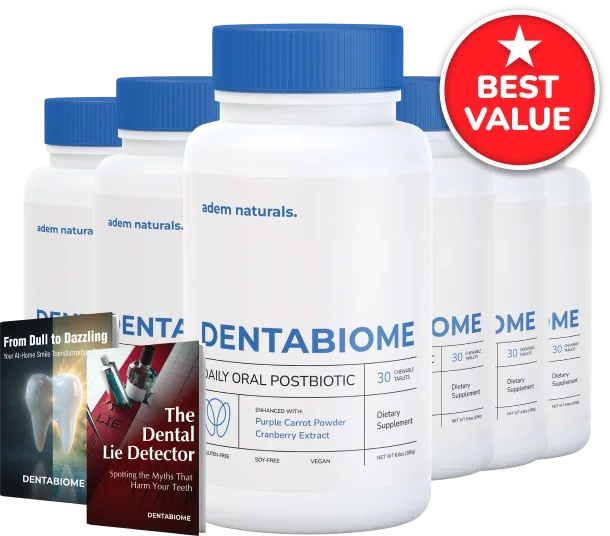
DentaBiome Review: Is This Oral Postbiotic Legit or Worth Buying?
A berry-flavored chewable oral postbiotic tablet marketed for gum bleeding, bad breath, and cavity prevention, sold in 2, 3, or 6 bottle packs through the official website.
Read the reviewFrequently Asked Questions About Lactobacillus Salivarius
Does Lactobacillus salivarius really work?
Research suggests some strains may support certain oral health measures, such as plaque and gum bleeding, in small human trials. The evidence is early, strain-specific and mostly based on surrogate markers. It has not been shown to treat or prevent gum disease or cavities.
Is Lactobacillus salivarius safe?
For most healthy adults the species appears to have a low safety risk at amounts used in studies, and side effects are usually mild. Rare serious infections have been reported with Lactobacillus probiotics in people who are very ill or immunocompromised. Ask a doctor first if that applies to you.
Is Lactobacillus salivarius the same as Ligilactobacillus salivarius?
Yes. The species was renamed when the Lactobacillus genus was split, but many labels and studies still use the older name.
Does the form matter, live or heat-killed?
Possibly. Some trials used heat-killed cells and others used live bacteria. Results seen with one strain and form cannot be assumed for others.
Can it be taken with antibiotics?
Antibiotics may kill live probiotic bacteria, which could reduce their effect. Ask a pharmacist or doctor about timing, especially if you have other health conditions.
Sources
- Applications and safety considerations of Lactobacillus salivarius as a probiotic in animal and human health — PubMed
- Lactobacillus Bacteremia and Probiotics: A Review — PMC
- Probiotics: What You Need To Know — NIH Office of Dietary Supplements
- Journal of Oral Microbiology (heat-killed L. salivarius CP3365 trial) — DOAJ
Last reviewed: