Creatine: Benefits, Research & Safety
Creatine is a compound your body makes and also gets from foods like meat and fish. People take it as a supplement, most often creatine monohydrate, mainly to support strength and high-intensity exercise. It is one of the most studied sports supplements, and researchers are also looking at memory and healthy aging.
Creatine Ingredient Guide
Also known as: Creatine monohydrate, Creatine HCl, Creatine ethyl ester, Micronized creatine
- What it is
- Creatine is a natural compound made from amino acids, stored mostly in muscle. Meat and fish supply small amounts, and supplements provide more.
- What it does
- In muscle, creatine helps recycle ATP, the cell's quick energy currency, during short, intense efforts. It is also found in the brain, where it is thought to play a similar energy role.
- How it is used
- It is usually taken as a powder mixed into a drink, or as capsules, once a day. Some people use a short loading phase, while others take a smaller daily amount.
- Natural sources and forms
- Dietary sources include red meat and fish, and vegetarian diets tend to supply little. Creatine monohydrate is the most studied form. Other forms, such as hydrochloride or ethyl ester, have not been shown to work better.
- Why it appears in formulas
- Makers add it to pre-workout, recovery and muscle-support products because of its research record in exercise. It is increasingly added to products aimed at healthy aging and mental energy.
- What to know before use
- If you have kidney disease, bipolar disorder, or are pregnant or breastfeeding, talk with a healthcare professional first. Evidence in these groups is limited or points to caution.
What the Research Says
Overall: Strong evidence
Creatine monohydrate has hundreds of human trials behind it, mostly on exercise performance. Position statements from the International Society of Sports Nutrition conclude it is effective and safe for healthy people when used within studied amounts.
The best evidence is for short, high-intensity efforts and for gains in strength and lean mass when combined with resistance training. Evidence in older adults is promising but less consistent, and it again works best alongside training.
Research on memory and thinking is newer. Meta-analyses of randomized trials suggest a small memory benefit, possibly larger in older adults. However, effects on overall cognition and executive function were not significant in a 2024 meta-analysis of 16 trials with 492 participants. Trials are small and differ in design, so results are early.
Most studies run weeks to months. Long-term data exist, but fewer. Evidence for people with kidney disease is very limited. Product marketing often goes beyond this evidence, especially claims for non-monohydrate forms.
| Studied for | What the research says | Evidence |
|---|---|---|
| High-intensity exercise and strength | Many trials show creatine, combined with resistance training, may support strength, power and lean mass in healthy adults. This is the best-supported use. | Strong evidence |
| Older adults and muscle | Studies suggest creatine plus resistance training may support strength and lean mass in older adults. Results vary between trials. | Moderate evidence |
| Memory | Meta-analyses of randomized trials found a small memory benefit, with some analyses suggesting a larger effect in older adults. Trials are small and findings are not fully consistent. | Limited evidence |
| Broader cognition and mood | A 2024 meta-analysis found no significant effect on overall cognition or executive function. Research on mood and brain health is still early. | Early evidence |
Did you know? Why blood tests can look off
Your body breaks creatine down into creatinine, which doctors measure to estimate kidney function. Taking creatine can raise creatinine levels without kidney injury. That is why it helps to tell your clinician about your use before lab work.
Amounts Used in Studies
These are amounts researchers used, not dosing advice. Ask your doctor or pharmacist what is right for you.
| Form | Amount | Study context |
|---|---|---|
| Creatine monohydrate, loading phase | About 20 g/day (split into several doses) for 5 to 7 days | Short loading used in sports studies to raise muscle stores quickly; MedlinePlus notes up to 25 g/day for 14 days has been used |
| Creatine monohydrate, maintenance | About 3 to 5 g/day | Common in studies lasting weeks to months; MedlinePlus reports 4 to 5 g/day used up to 18 months |
| Creatine monohydrate, higher long-term | Up to 10 g/day | Used in some studies, reported by MedlinePlus as possibly safe for up to 5 years |
Safety, Side Effects and Interactions
Creatine monohydrate is considered likely safe for most healthy adults when taken in the amounts studied. The most common reported effects are stomach upset, bloating, muscle cramps and a small rise in body weight from water held in muscle. Dehydration has also been mentioned, though trials have not clearly confirmed it.
The International Society of Sports Nutrition found no compelling evidence that creatine harms kidney function in healthy people. Creatine can raise blood creatinine, a marker doctors use to estimate kidney function. This may not mean kidney damage, but tell your clinician you take it before blood tests.
Evidence for safety in people with existing kidney disease is very limited, and MedlinePlus advises talking with a professional first. Data in pregnancy and breastfeeding are lacking. Supplements are not tightly regulated, so product quality varies. Look for third-party testing.
Possible interactions
- Caffeine might reduce creatine's benefit for athletic performance, according to MedlinePlus.
- Caffeine combined with creatine may worsen symptoms in people with Parkinson disease, so caution is advised.
- MedlinePlus says it is not known whether creatine interacts with medicines, but check with a pharmacist if you take any, especially drugs that affect the kidneys.
- Creatine can raise creatinine on blood tests, which may affect how kidney function is read.
Avoid it or ask a doctor first if
- Kidney disease or reduced kidney function (ask a doctor first)
- Bipolar disorder (it might worsen mania)
- Pregnant or breastfeeding
- Taking medicines that affect the kidneys
- Under 18 without medical advice
- Parkinson disease and regular caffeine use
Supplements We've Reviewed That Contain Creatine
Each review checks the full formula, price, refund policy and side effects.
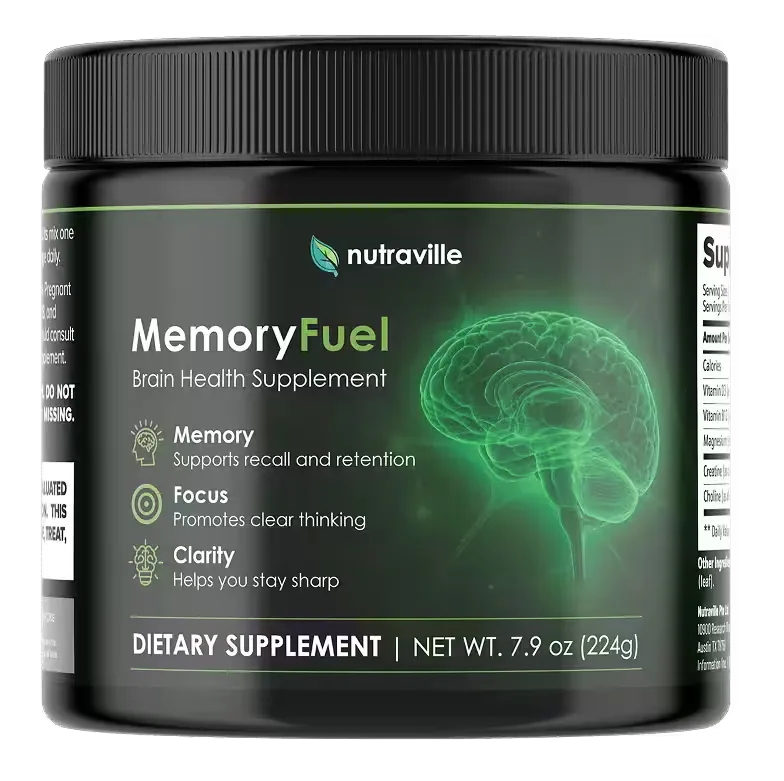
MemoryFuel Review: Does It Really Support Healthy Memory?
Daily powdered supplement marketed to support memory function and brain health, sold through the official website with a 90-day money-back guarantee.
Read the reviewFrequently Asked Questions About Creatine
Does creatine really work?
For short, high-intensity exercise and for strength and lean mass gains alongside resistance training, the research is strong. Evidence for memory is smaller and still early. Results vary between people.
Is creatine safe?
Creatine monohydrate appears safe for most healthy adults in the amounts studied, and reviews found no compelling evidence of kidney harm in healthy people. People with kidney disease, bipolar disorder, or who are pregnant or breastfeeding should ask a healthcare professional first.
Do I need a loading phase?
Studies have used both a short loading phase and a steady daily amount. Loading raises muscle stores faster, while smaller daily amounts get there over a few weeks. This is not personal dosing advice, so ask a professional.
Which form of creatine is best studied?
Creatine monohydrate has by far the most research. Other forms are often marketed as better, but they have not been shown to outperform it.
Does creatine cause weight gain or bloating?
Some people notice a small weight gain early on, mostly water held in muscle. Stomach upset or bloating has also been reported, especially with larger amounts.
Sources
- ISSN position stand: safety and efficacy of creatine supplementation in exercise, sport, and medicine — Journal of the ISSN
- The effects of creatine supplementation on cognitive function in adults: a systematic review and meta-analysis — PubMed
- Creatine and memory meta-analysis of randomized trials — PubMed
- Is the use of oral creatine supplementation safe? — PubMed
Last reviewed: